





Entelligence Helped Cybersecurity Company Grow Technology Platform Revenues Over 200% in Two Years
Entelligence provided 90% of a cybersecurity company’s...
.png?width=500&height=500&name=entelligence-logo-icon(1).png)


When a client's NetApp environment goes down at 2 a.m., the last thing you want to discover is that the support resource you placed doesn't actually know ONTAP – not at the level of depth, hardware generation, or firmware version that’s needed.
For professional services leaders and channel partners who build practices around NetApp, finding and vetting talent is one of the most consequential yet underestimated challenges in the business. It’s hard. The market is full of consultants who claim NetApp expertise.
That’s why I wrote this post: to help you understand what separates true NetApp specialists from generalist IT services staff, based on my experience managing IT engagements where NetApp is the underpinning technology.
NetApp environments are not interchangeable with general storage infrastructure. ONTAP, NetApp's proprietary operating system, has accumulated decades of capabilities and corresponding complexities across network-attached storage (NAS), storage area networks (SAN), and cloud-integrated deployments. The surface area of expertise required to support it is wide:
The talent gap this creates is real and has direct consequences for clients. NetApp clients need expert services that will speed their time to value from storage investments. Your service practice’s reputation depends on having the right resources on staff. Without the right people in place to meet client needs, you risk client churn, scope disputes, and the kind of quiet confidence erosion that surfaces during renewal conversations.
Here are the four most common pain points we hear from customers that have had negative experiences with NetApp services experts in the past.
Here are questions you can ask when vetting NetApp services specialists to validate (or debunk) their claims around experience and credentials, along with red flags that should give you pause.
Find out whether they have current certifications and whether their hands-on experience matches the client environment.
🚩 An engineer who has worked extensively with ONTAP 9.x on AFF A-Series systems may have meaningful gaps if your client is running older FAS hardware or a less common configuration.
Documented SLA commitments are a non-negotiable element of any professional services or support engagement. For critical storage infrastructure, the benchmarks worth targeting are a one-hour critical response time and a four-hour resolution window.
🚩 If a consultant can't articulate their SLA commitments in writing, that's a red flag. Verbal assurances are not SLA contracts.
A significant portion of NetApp installed base sits on hardware that has reached end-of-life or end-of-service-life. Clients often need to extend the operational life of EOSL systems while they plan refresh cycles. Not all consulting resources can support EOSL hardware; it requires firmware knowledge and willingness to work outside the OEM support envelope.
🚩 “No” is a red flag. If a prospective resource can't support post-EOSL systems, that gap will surface quickly in real client engagements.
Ask about the diagnostic toolkit. Experienced specialists will have a clear answer, and NetApp engineers who work at scale typically develop or have access to diagnostic tooling and runbooks that go beyond what's available natively in ONTAP.
🚩 Providers who rely exclusively on built-in NetApp tools may lack the operational maturity to handle complex or novel failure scenarios efficiently.
References from comparable client environments are the clearest evidence that a specialist's experience translates to real-world outcomes. Ask for references specifically from clients in your target verticals.
🚩 If a prospective resource is reluctant, evasive, or unable to provide any, that’s a signal.
Some engagements require this, such as those involving warranty claims or certified support agreements. If a NetApp specialist claims to have certifications and they’re required for the project at hand, ask for proof, and know what verified looks like vs. vague claims. Engineers who hold active credentials can provide documentation, and certifications can be confirmed through NetApp's learning and credentialing systems.
🚩 Flags to watch for: vague references to "NetApp experience" or "NetApp training" without a specific credential name and verification path.
NetApp's certification program is tiered and role-specific, designed to validate depth rather than breadth. Two credentials are most relevant for when evaluating support and professional services talent:
When a client engagement involves a significant implementation, migration, or architecture project (vs. ongoing support), NCIE credentials are one good signal that they’ll have vetted experience aligned with specific use cases.
Entelligence is built specifically to solve the vetting and matching problem for channel partners and professional services organizations that need certified NetApp talent on demand. We’ve been delivering white-label services on behalf of ISVs and the channel for nearly 30 years. Here’s what makes us stand out:
If you're building or scaling a NetApp practice and finding that sourcing certified talent is the friction point, we can help.
Here are three examples of certified NetApp experts that are part of our team at Entelligence.
James Carpignano’s NetApp-specific expertise is grounded in decades of enterprise storage work: Early in his career, James served as a system and storage administrator which quickly evolved to a SAN and NAS Data Protection Consultant at NetApp, back when it was known as Network Appliance. Since then, he’s built on that foundation with roles at Brocade, EMC, Data Domain, and Cloudian. 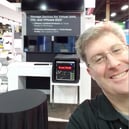
James’ skill set spans VMware, Enterprise Storage technologies including NAS, SAN, Object/Cloud Storage, storage virtualization, high availability, Cisco technologies, backup solutions, and UNIX environments, and his cross-stack fluency frequently proves valuable in complex NetApp engagements.
As a senior Storage Engineer with deep SAN and NAS expertise, Tom brings analytical rigor and cost-to-performance discipline to the enterprise clients he serves. Tom is also a NetApp Certified Data Administrator (NCDA) for ONTAP. This is the credential that validates hands-on proficiency across NetApp's unified storage platform.
Prior to joining Entelligence’s consulting team, he spent over two decades at ConocoPhillips delivering enterprise storage solutions on a global stage, including roles as Storage Expert for Geology, Geophysics, and Reservoir Engineering. He also worked as a Storage Engineer based in Anchorage, where he was responsible for budgeting, designing, implementing, and supporting data center storage, backups, and disaster recovery across multiple sites.
Tom brings hands-on portfolio spanning NFS, CIFS, iSCSI, FC, NetApp, Dell EMC Isilon, and High Performance Computing environments, along with field experience across North America, Europe, Asia, and Australia.
Shane Taylor brings over 30 years of enterprise-class IT experience, including 21 years of hands-on NetApp architecture, implementation, migration, and operational leadership experience. This depth of expertise is reflected in the guidance and execution he brings to customer engagements and explains why Entelligence embeds Shane directly within Fortune 100 customer environments as a dedicated technical resource resident specializing in NetApp and Azure solutions.
Before joining Entelligence, Shane served as the NetApp Storage Architect at Dynamix Group and previously spent more than a decade within NetApp Professional Services. Earlier in his career, he held technology roles supporting IBM customers and served as an Intelligence Analyst in the U.S. Army, providing an unusually broad foundation across enterprise and mission-critical environments.
Shane's specialties include NAS, SAN, backup and recovery, migrations, tech refreshes, crisis management, and technical implementation leadership. He represents the full operational spectrum of what a modern NetApp practice demands, combining architecture, implementation, troubleshooting, optimization, and customer-facing leadership across the lifecycle of enterprise storage solutions.
NetApp environments are complex, and the support and professional services talent required to work in them well is specific. The cost of placing the wrong resource is measured in client SLA failures, escalation cycles, and reputational risk.
If you need help finding the right NetApp talent, Entelligence can quickly match you with a vetted specialist. The three consultants we’ve spotlighted here represent the standard we at Entelligence hold across our entire consulting bench: our experts are vetted, field-tested, and ready to work on day one.
Contact us to get started today or explore the NetApp service catalog to see our full range of certified capabilities.
Yes, with important qualifications. Once hardware has reached end-of-service-life, the OEM warranty has typically already lapsed, which means the warranty-voiding concern doesn't apply in the same way it would for in-warranty equipment. Third-party consultants and support providers can legally service EOSL hardware, and many maintain parts inventories and firmware expertise specifically for this purpose. What matters is verifying that the consultant has documented experience with the specific hardware generation and a clear parts sourcing strategy. If there are active OEM support agreements still in place for adjacent systems, review those terms carefully before engaging a third party, as some agreements have cross-contamination provisions.
Ask the consultant to provide their certification documentation directly, including the credential name, the issuing date, and the expiration or renewal date. NetApp certifications have maintenance requirements, and a credential that was earned several years ago may not reflect current ONTAP versions or hardware generations. You can also ask the consultant to provide verification through NetApp's credentialing system. If a consultant is reluctant to provide documentation or can only reference informal training rather than a formal credential, treat that as a signal.
The NCSE (NetApp Certified Support Engineer) validates the ability to troubleshoot and support NetApp environments in production — diagnostics, performance analysis, data protection operations. It's the right credential for ongoing support and managed services engagements.
The NCIE (NetApp Certified Implementation Engineer) validates the ability to design and implement NetApp solutions, and it comes in specialist tracks: NCIE-SAN for storage area network environments and NCIE-DP for data protection architectures. NCIE is the right credential for implementation projects, migrations, and architecture engagements.
Most client environments need both at different points: NCSE-credentialed engineers for steady-state support, NCIE-credentialed specialists when implementation or architecture work is on the table.
Certified consultants and third-party support providers typically offer comparable technical depth to OEM professional services at lower cost — often meaningfully so, particularly for project-based or on-demand work where OEM pricing reflects bundled overhead. The qualification that matters is "certified": an independent consultant with active NCSE or NCIE credentials and documented experience in the relevant ONTAP version and hardware generation can deliver equivalent outcomes. A lower-cost resource without those credentials is a false economy. The cost advantage of the independent model is real, but it only holds when the credential depth is equivalent to what the OEM would provide.